



FAQs

Explosion-Proof
What does "explosion-proof" mean? What is the difference between explosion-proof and intrinsically safe?
Explosion-proof equipment is designed so that should an explosion occur, then it will be contained with an adequate enclosure.
Intrinsically safe equipment is designed to limit the energy of sparks and surface temperature in order to inhibit an explosion from occurring.
Our hazardous area scales are intrinsically safe.
What is a Class 1 Division 1 hazardous area?
Class I Division 1 hazardous areas are locations that are defined by the National Electrical Code (NEC)
Handbook with articles 500, 501, 502, 503, 505, and 506.
Class I locations are those in which flammable gases or vapors are present in the air in quantities sufficient to produce explosive or ignitable mixtures (NEC 501).
Division 1 is a subset of Class I and is classified as an area where the explosive or flammable gases, vapors or liquids mentioned above can exist under normal, everyday operating conditions.
What is a Zone 2 hazardous area?
Zones are classified by the National Electric Code (NEC) and described in article 505.
One characteristic of Zone 2 areas is when ignitable concentrations of flammable gases or vapors are not normally present but could be present in certain cases that are clarified in the NEC standards.
Zones are also classified by ATEX 1999/92/EC Directive based on the frequency and duration of the occurrence of the explosive atmosphere.
Zone 2, according to ATEX 1992/92/EC Directive, is when an explosive atmosphere is likely to occur infrequently or for short periods of time.
What is explosion-proof wiring?
For explosion-proof wiring, which is required in Div 1, conduits and gaskets are required.
They are used to isolate the circuit from hazardous gases.
In sequences, a gasket is attached to the conduit as a fixture into which you can pour sealant.
This setup prevents the gases from flowing into the cable conduit and entering uncontrolled areas.
Laboratory Balances
1.What are the main applications of laboratory balances?
Laboratory balances are widely used in research, industrial, pharmaceutical, food, and other sectors where precision and accuracy of mass measurements are crucial.
They are used to weigh chemical substances, samples, medications, laboratory materials, and other objects requiring precise mass measurement.
2.What are the differences between analytical and precision balances?
Analytical and precision balances are types of laboratory balances, but there are some differences between them.
Analytical balances are more precise and have a greater ability to accurately measure small masses, often to milligrams or even micrograms.
Precision balances usually have less precision and may have a higher capacity, but are still used for measurements requiring high accuracy.
3.How to care for a laboratory balance to ensure its accuracy?
To keep a laboratory balance in good condition and ensure its accuracy, it is important to regularly perform calibration according to the manufacturer’s recommendations.
It is also important to keep the balance clean and avoid exposure to environmental conditions that could affect its performance, such as vibrations, humidity, or temperature.
4.What factors should be considered when choosing a laboratory balance?
Analytical and precision balances are types of laboratory balances, but there are some differences between them.
Analytical balances are more precise and have a greater ability to accurately measure small masses, often to milligrams or even micrograms.
Precision balances usually have less precision and may have a higher capacity, but are still used for measurements requiring high accuracy.
5.Are laboratory balances calibrated before delivery?
Most laboratory balances are calibrated before delivery by the manufacturer to ensure their accuracy.
However, regular calibrations in the laboratory are recommended according to the manufacturer’s guidelines to maintain high-quality measurements throughout the usage period.
6.What types of laboratory balances are available on the market?
Various types of laboratory balances are available on the market, including analytical, precision, and laboratory balances of different capacities and precision.
There are also specialized balances for specific applications, such as balances for weighing toxic substances, moisture analyzers, and others.
7.What are the advantages of using laboratory balances in a laboratory?
Laboratory balances allow for accurate and repeatable mass measurements, which are essential in many research and industrial fields.
They also provide standardization and precision in measurements, facilitating the conduct of experiments, scientific research, and quality control in production.
Moisture Analyzers
1.What Are Moisture Analyzers?
Moisture analyzers are advanced laboratory devices that combine weighing and moisture analysis. They are essential in chemical, pharmaceutical, and food research, where determining water content in samples is crucial.
2.How Do Moisture Analyzers Work?
Unlike standard laboratory balances, moisture analyzers are equipped with a heating element (halogen) that removes moisture from a sample by heating it.
The device then calculates the post-drying weight and determines moisture content.
3.What are the advantages of halogen heating?
The most important performance factor is precise and fast temperature regulation, which is best delivered by halogen lamps because of their low mass and therefore fast reaction time.
This ensures repeatable results starting from the first measurement (some other heating sources either deliver different results in the first measurement or require a warm up measurement, which wastes time and resources).
Furthermore, an even heat distribution on the sample surface is essential for repeatable and reliable results.
We advise you to ask us or another manufacturer for a demonstration in order to experience the performance in real-life.
4.Why Choose LT Moisture Analyzers?
Moisture analyzers from Longteng guarantee precise measurements and reliability.
They are perfect for research laboratories, food industry, and pharmaceuticals.
Mass Comparator
1.What is a mass comparator?
A mass comparator, or mass comparator balance, is a gravimetrical measuring instrument with high resolution and exceptional repeatability, enabling the smallest difference in mass to be accurately determined. Window-range mass comparators offer high resolution weighing in a 'window' around a defined weight value and are used purely for mass calibration and mass determination for masses within this window. However, full-range mass comparators are highly versatile and can be used not only for weight determination but also for general weighing applications, particularly those in which there are small samples and large tare loads or when large and small sample qualities need to be combined in one weighing process.
2.What is the difference between weighing and mass comparison?
In a regular weighing process, the balance is calibrated and the weight result of any item placed on the balance is measured from zero g.
This process is called "absolute weighing".
Mass comparison, which is used for weight calibration, is a specific type of differential weighing in which the reference point is not the calibrated balance but is the reference weight against which the test weight is compared.
Hence why this type of balance is known as a mass comparator.
When calibrating a test weight, the reference weight to which it is compared must be at least one accuracy class higher than the test weight.
However, the reference weight must also be calibrated against another weight in an even higher accuracy class.
This chain of comparisons provides metrological traceability to the definition of the kilogram based on Planck's constant.
3.What is the difference between a mass comparator and a balance?
A mass comparator and an balance have the same design and work according to the same principles.
The difference between a mass comparator and a balance is the performance, in particular the readability and repeatability.
Regular laboratory balances are specified by the main performance properties: repeatability (RP), eccentricity (EC), nonlinearity (NL) and sensitivity (SE).
However, as weight calibration is carried out by differential weighing, mass comparators are additionally specified with differential weighing repeatability ABA (RP ABA).
Hydrostatic Balance
1.What is Hydrostatic Balance?
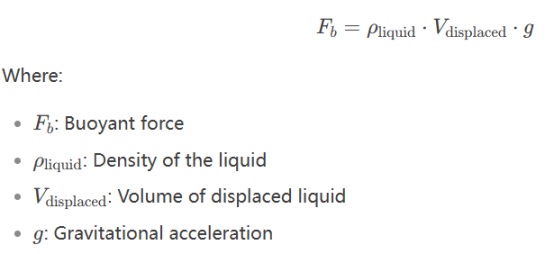
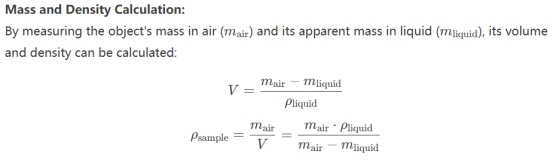
Hydrostatic Balance is a precision measuring instrument based on Archimedes' principle of buoyancy, used to determine the buoyant force acting on a solid submerged in a liquid, thereby calculating the sample's density, porosity, or compositional properties.
Buoyancy Measurement:
When an object is immersed in a liquid (typically water), it experiences an upward buoyant force equal to the weight of the displaced liquid (Archimedes' principle).
2.What is Density?
Density is a physical parameter that provides information on the mass of a sample or body divided by its volume: in other words, how tightly a substance's molecules are packed together in space. The density is usually represented by the Greek letter rho "ρ".
The Latin letter "d" is also commonly used.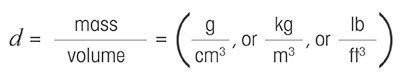
3.How to Measure the Density of Solids?
To measure density of solids using a balance is an easy and convenient process that delivers highly reliable results when compared to other methods in which the volume of the part is determined independently of the weight.
By converting a standard laboratory balance with the addition of a density kit, you avoid the necessity to purchase a dedicated piece of equipment to carry out this straightforward procedure. This makes the purchase of the density kit accessory a very cost-effective investment.
With the addition of a glass sinker of known volume, the density kit can also be used for determining the density of liquid samples.
The built-in density application provides step-by-step instructions making it easy for even untrained operators to use.
4.What is the difference between density and mass?
Mass is a measure of how much matter there is within an object or liquid while density expresses how much mass there is per a certain amount of volume.
For example, 10 kg of steel and 10 kg of feathers have the same mass, but different volumes therefore they have different densities.
5.What are some typical applications of density measurement?
Some applications of density measurement includes the determination of alcohol concentration in spirits, control of fermentation process in wine and beer production,Brix (sugar content) measurement of intermediate and final products in food and beverages products.
Density and other concentration as API gravity in heavy oils, paraffin and lubricants in the Petrochemical segment.
Density (specific gravity) in battery acid in the automobile industry, as well as other solvents, acids and bases in the chemical industry.
Lastly, there are many applications in the pharmaceutical industry, such as the density measurement of specific gravity in cosmetics, personal care products, and many more.
Click on the links above to read our detailed applications or access our expertise library to find the right application note according to your sample.
